


Platform
Beken BK1662 foundation
A 200-channel dual-band GNSS platform for entry-level RTK tests and custom-board prototypes.
An entry-level dual-band RTK GNSS module for evaluation, education, and early embedded prototypes.
Couldn't load pickup availability


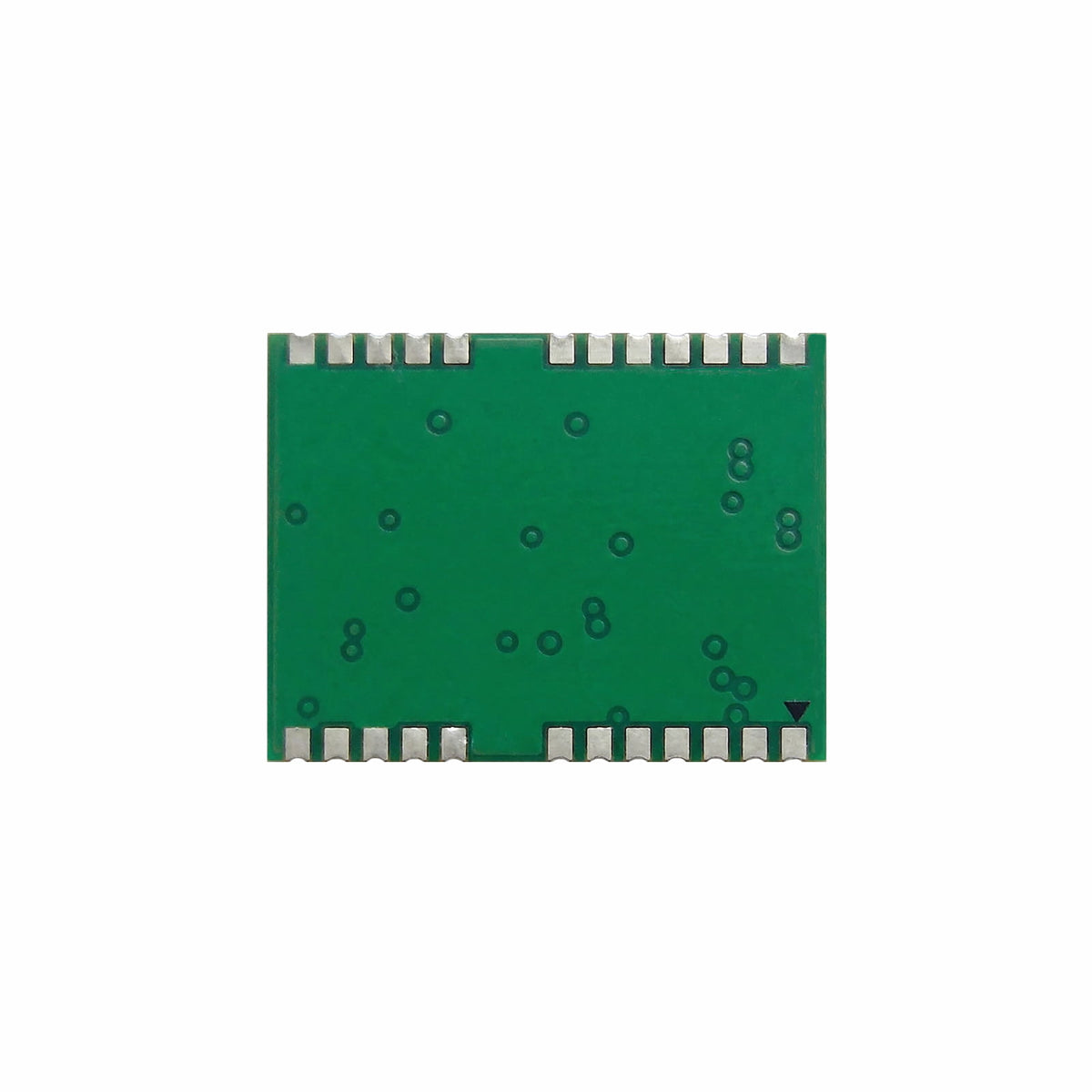
Key Facts
NOMAD brings dual-band RTK to custom boards, classroom projects, and early positioning prototypes. Start with K16C for standard RTK or K16E to evaluate RTK + DR.
Start with board-level RTK for testing, education, and early embedded positioning prototypes.
Built around a dual-band L1/L5 GNSS platform for RTK-capable module-level integration.
K16C supports standard RTK evaluation. K16E adds RTK+DR capability for moving platforms.
A practical starting point for custom-board experiments before production integration.
Configuration Selector
K16C provides standard RTK at 1 Hz. K16E adds a BOSCH BMI325 6-axis IMU and RTK + DR support, with updates up to 10 Hz and a 1 Hz default.
| Configuration | K16C Standard RTK | K16E RTK + DR |
|---|---|---|
| Positioning role | Standard dual-band RTK module | Dual-band RTK module with dead reckoning support |
| Recommended use | Open-sky RTK tests, education, and entry-level embedded prototypes | RTK + DR evaluation on moving prototypes and short GNSS interruption tests |
| Best fit | Stationary or open-sky systems | Moving-platform experiments with inertial-sensor integration |
| RTK capability | Yes | Yes |
| Dead reckoning | Not included | Included |
| IMU | Not included | BOSCH BMI325 6-axis IMU |
| Current price | $39.00 / |
$69.00 / |
| Update rate | 1 Hz | Up to 10 Hz; 1 Hz default |
| Host interface | 1 × UART | 1 × UART |
You are evaluating standard RTK, designing a cost-sensitive GNSS board, or working mainly in open-sky conditions.
You want to evaluate GNSS and inertial-sensor integration on a moving prototype, including short interruption tests.
Not sure which configuration fits your project?
Discuss NOMAD integration →Product Overview
NOMAD is Kalmix’s entry-level board-level RTK GNSS module family for testing, education, and early embedded positioning prototypes.
Build NOMAD into your own host board with a suitable GNSS antenna, power supply, and UART connection. The module gives you access to the integration details needed for a custom design.
Use K16C to evaluate standard RTK, or K16E to explore inertial-assisted positioning on a moving platform. Validate your board and test conditions before planning a finished product.
Designed for teams building their own control boards, receiver hardware, or embedded GNSS systems.
Plan your host board, external antenna, power supply, and mechanical integration as part of the prototype.
Start with documented tests and small prototypes, then review the integration requirements for your application.
Module-Level Capabilities
A 200-channel dual-band GNSS platform, RTCM correction input, and one UART interface provide the foundation for entry-level RTK evaluation. K16E adds an inertial-sensor option for moving-platform experiments.
A 200-channel dual-band GNSS platform for entry-level RTK tests and custom-board prototypes.
Designed for RTK workflows where the host system manages GNSS output, correction input, and configuration.
K16E combines GNSS and a BOSCH BMI325 6-axis IMU for dead-reckoning evaluation on moving platforms.
Built for teams that need pin-level evaluation, interface discussion, layout planning, and project-scoped support.
Module-to-Receiver Path
Evaluate NOMAD on your own electronics, use SCOUT for a packaged receiver workflow, or discuss project-specific OEM integration.
You are building your own electronics and need a practical starting point for RTK tests, education, or early prototypes.
You want a packaged receiver for evaluation, education, or prototyping, with the antenna, enclosure, and USB-C connection already integrated.
Your application needs project-specific hardware, connector, antenna, enclosure, firmware behavior, or integration support beyond a standard SKU.
Use the GNSS Receiver Guide to choose the hardware form that matches your integration path. If satellite visibility is the deciding constraint, use the GNSS + IMU / Dead Reckoning guide to determine whether a short blackout or sustained degraded sky should change your system choice.
Technical Specifications
Reference values from the NOMAD K16 documentation. Review the published specifications, pinout, and protocol before planning your board or test setup.
| GNSS Engine | |
| Receiver type | 200-channel Beken BK1662 dual-band GNSS engine |
| GPS signals | L1C/A · L5 |
| GLONASS signals | L1 |
| Galileo signals | E1 · E5a |
| BeiDou signals | B1I · B1C · B2a · B2I |
| QZSS signals | L1C/A · L5 |
| Navigation update rate | K16C: 1 Hz · K16E: up to 10 Hz, 1 Hz default |
| Positioning & Velocity Accuracy | |
| Position accuracy | Standalone: ≤ 1.5 m · RTK fixed: ≤ 10 cm |
| Velocity accuracy | 0.1 m/s |
| Correction input | RTCM v3.x; see Protocol for supported messages |
| TTFF & Sensitivity | |
| Time to first fix | Cold start: 28 s · Hot start: 1 s · Reacquisition: 1 s |
| Sensitivity | Cold-start acquisition: −148 dBm · Hot-start acquisition: −159 dBm · Reacquisition: −159 dBm · Tracking: −165 dBm |
| Interface & Protocol | |
| Host interface | K16C / K16E: 1 × UART |
| UART baud rate | 115,200 bps default; configurable up to 2,000,000 bps |
| Timing output | PPS, 20 ns accuracy |
| Output protocol | NMEA 0183: GGA, RMC, GSV, GSA, GLL, VTG, GST |
| Configuration | POLCFG commands; see Protocol |
| K16E inertial sensor | BOSCH BMI325 6-axis IMU |
| K16E dead reckoning | GNSS and inertial-sensor integration for moving-platform evaluation |
| Electrical Characteristics | |
| Power supply / VCC | 3.0 V – 3.6 V, typical 3.3 V |
| Power consumption | K16C: 27 mA acquisition / 30 mA tracking · K16E: 27 mA acquisition / 35 mA tracking |
| Standby mode | 14 μA |
| Physical & Environmental | |
| Package | 24-pin LCC |
| Dimensions | 12.2 × 16.3 × 2.4 mm |
| Operating temperature | −40 °C to +85 °C |
| Product type | Board-level GNSS module for integration into user-designed hardware |
Field Evidence
GT-02 includes K16 and K35 evaluation records. Use the documented setup and interpretation notes as context when planning your own evaluation.
Read the existing Ground Truth record for K16 and K35, including the documented test setup and reading notes.
Each record describes a specific evaluation setup. Its results are not a performance guarantee for a new board or application.
Integration & Host Platforms
Both K16C and K16E provide one UART interface for NMEA output, correction input, and configuration. The host board handles the serial connection, power supply, antenna integration, and correction workflow.
Evaluate NMEA output and RTCM input with an MCU host that provides a suitable UART connection and electrical interface.
Build a Linux-host evaluation setup through a suitable UART or USB-to-UART bridge, with host-side configuration and correction handling.
Prototype GNSS integration on robotics controllers or vehicle electronics, and evaluate K16E for GNSS and inertial-sensor workflows.
Explore custom receiver boards, antenna layouts, and mechanical integration before reviewing production requirements.
Target Applications
Explore the same application directions as SCOUT, using NOMAD at the board level to test positioning workflows before committing to a finished system.

Evaluate RTK positioning on outdoor ground robots and early mobile-platform prototypes.

Prototype positioning workflows for yard vehicles and mobile industrial platforms in controlled evaluations.

Test RTK guidance and positioning concepts for farming equipment and outdoor field projects.

Evaluate positioning concepts for site mapping, machine guidance, and survey-support prototypes.

Build experimental vehicles and compare positioning workflows in documented outdoor test environments.

Hands-on learning, custom-board prototyping, and system evaluation with real RTK data.
Quick Facts
A compact reference for configuration selection and board-level evaluation.
Frequently Asked Questions
Practical answers about NOMAD, K16C / K16E selection, UART integration, documentation, and evaluation orders.
NOMAD is Kalmix’s entry-level K16 Series board-level RTK GNSS module family for testing, education, and early prototypes. It is designed for integration into your own electronics and requires a host board, suitable GNSS antenna, power supply, and correction workflow.
K16C provides standard RTK with a 1 Hz update rate. K16E adds RTK + DR support and an integrated BOSCH BMI325 6-axis IMU. K16E supports updates up to 10 Hz, with a 1 Hz default.
Choose K16C or K16E above to view the current price and availability and place an evaluation order. For volume quantities or project-specific requirements, contact Kalmix to discuss supply and integration.
Choose NOMAD when you are building your own PCB or evaluating board-level integration. Choose SCOUT when you prefer a packaged receiver with antenna, enclosure, and USB-C connectivity for evaluation, education, or prototyping.
Yes. NOMAD requires a suitable external dual-band GNSS antenna and a host-board RF design. Review the hardware overview and pinout documentation before connecting the antenna or planning a PCB.
Both K16C and K16E provide one UART interface, with a default baud rate of 115,200 bps and a configurable maximum of 2,000,000 bps. A PPS timing output is also available. Check the pinout and protocol documentation for electrical and command details.
The published NOMAD documentation includes introduction, hardware overview, specifications, pinout and interfaces, mechanical dimensions, protocol reference, and certifications and compliance. The documentation links are listed beside the technical specification table.
RTK operation requires a suitable GNSS antenna and RTCM corrections supplied by the host system. The host manages the correction source and feeds supported RTCM messages to the module through UART. Review the protocol documentation when setting up the correction workflow.
Yes. Start with module-level evaluation and review your power supply, antenna design, UART connection, and board layout. Project-specific firmware, protocol, quantity, and support requirements can be discussed with Kalmix based on technical feasibility and project scope.
The Field Evidence section links to Ground Truth record GT-02, which includes K16 and K35 evaluation records. Review the setup and interpretation notes before applying any findings to your own board or application.